Truck suspension noise can be more than an annoyance—it’s often an early warning that a wear item is loose, dry, or failing. In this guide, we’ll break down the most common sounds, what usually causes them, and when it’s time to schedule a professional inspection in Central Jersey.
If you rely on your truck for work or run a fleet, catching suspension problems early can help prevent bigger repairs and avoid unexpected downtime.
What Is Truck Suspension Noise?
Truck suspension noise is any unusual sound coming from components that support the vehicle’s weight and control ride movement, including springs, shocks, bushings, steering linkage, and mounting hardware. These noises often show up when turning, braking, driving over bumps, or carrying a load.
What Are The Most Common Causes Of Truck Suspension Noise?
Most suspension noises come from wear, lack of lubrication, or movement where parts should be tight and cushioned. The sound you hear (clunk, squeak, rattle, or grinding) is a clue, but a proper inspection is the safest way to pinpoint the source.
If the noise is getting worse, changes with load, or comes with steering pull or uneven tire wear, it’s smart to have a shop experienced in steering and suspension repair take a look before the issue spreads to tires, steering components, or other suspension parts.
1) Worn or dry bushings (squeaks and creaks)
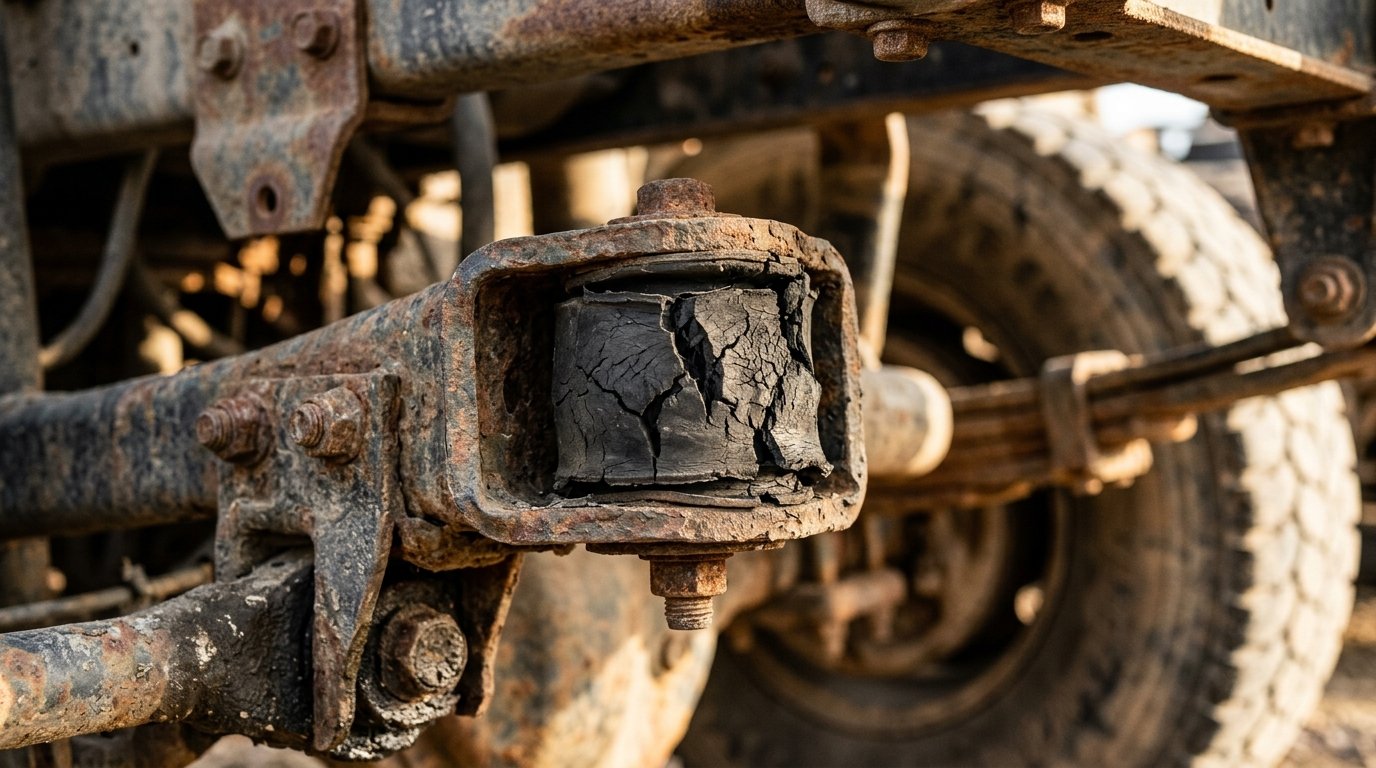
Rubber or polyurethane bushings sit between metal components to absorb vibration and allow controlled movement. Over time, they can dry out, crack, or compress, which often leads to squeaking over bumps or creaking during slow turns.
Common bushing-related symptoms include:
- Squeaks at low speed over uneven pavement
- Noise that’s worse in dry weather (when rubber is less pliable)
- Loose or “wandering” steering feel
2) Loose or worn shocks/struts (rattles, knocking, and bounce)
Shocks control suspension movement. When mounts loosen, bushings wear, or the shock loses damping, you may hear rattling or knocking—especially over repeated bumps. You might also notice extra bounce, nose-diving under braking, or reduced stability when loaded.
Because shock issues can affect braking and control, pairing the inspection with a truck alignment service is often a smart move after repairs—especially if handling has changed.
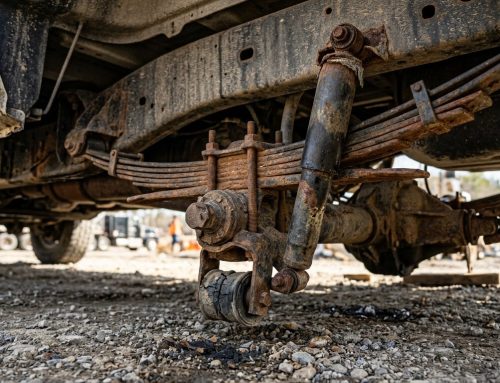
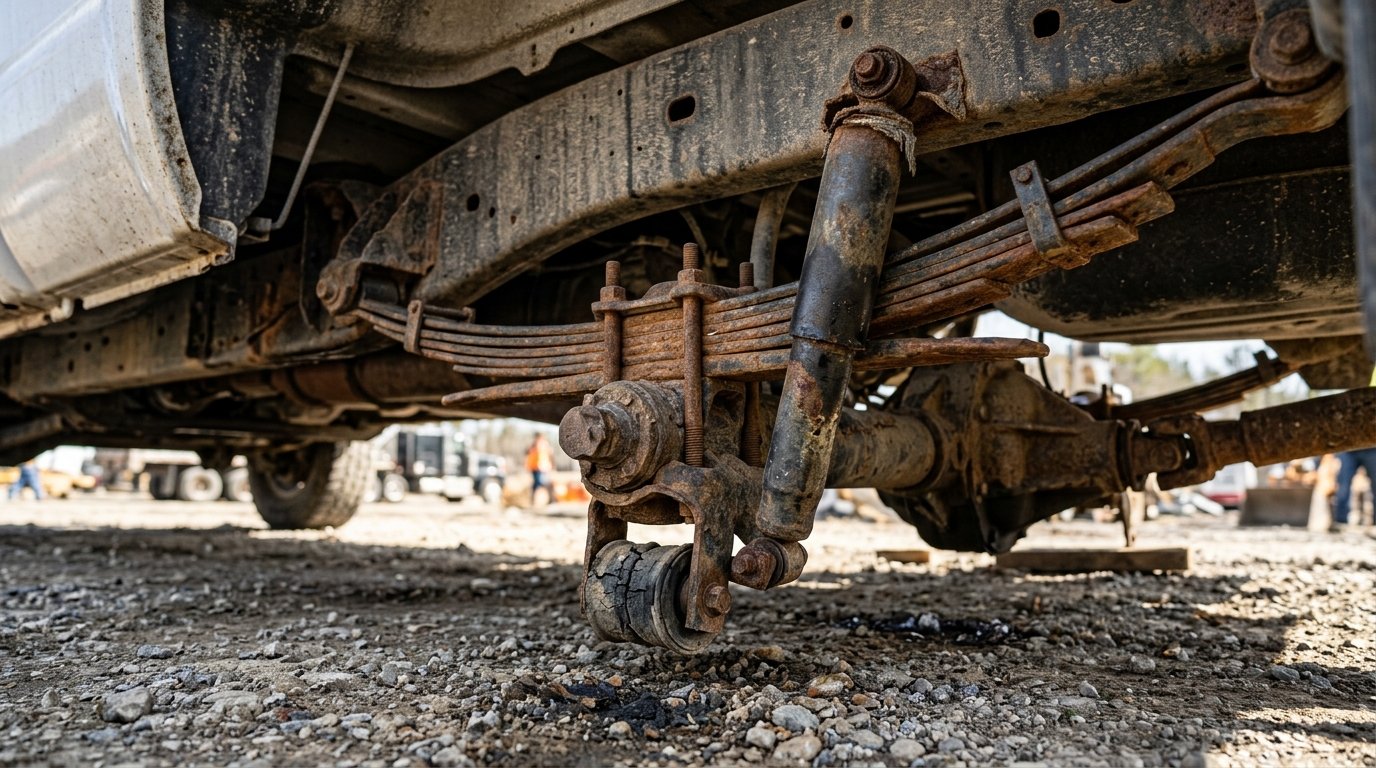
3) Leaf spring wear or shifting (clunks, pops, and metal-on-metal sounds)
On many heavy-duty trucks, leaf springs do the heavy lifting—literally. If a leaf is cracked, a center bolt is loose, a shackle is worn, or U-bolts lose clamp force, you may hear a clunk when starting, stopping, or hitting a bump.
Pay attention to noises that happen during load transfer, such as:
- A single clunk when accelerating from a stop
- A pop when backing up or turning into a driveway
- Repeated clunking over bumps when loaded
4) Steering component wear that sounds like suspension noise
Not every front-end noise is “suspension” only. Tie rod ends, ball joints, and other steering parts can create similar clunks and knocks, especially while turning or when the wheel is off-center.
If you’re also dealing with play in the steering wheel or a knock during turns, it may help to review common signs of steering issues in this guide on commercial truck steering repair and then schedule an in-person inspection to confirm the root cause.
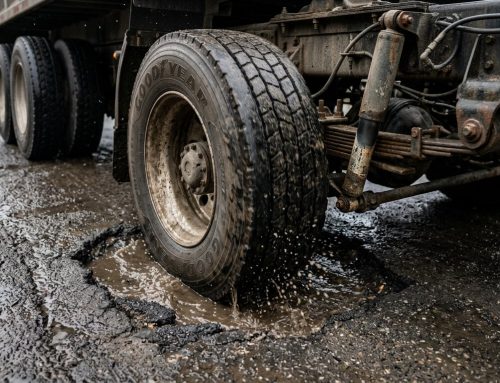
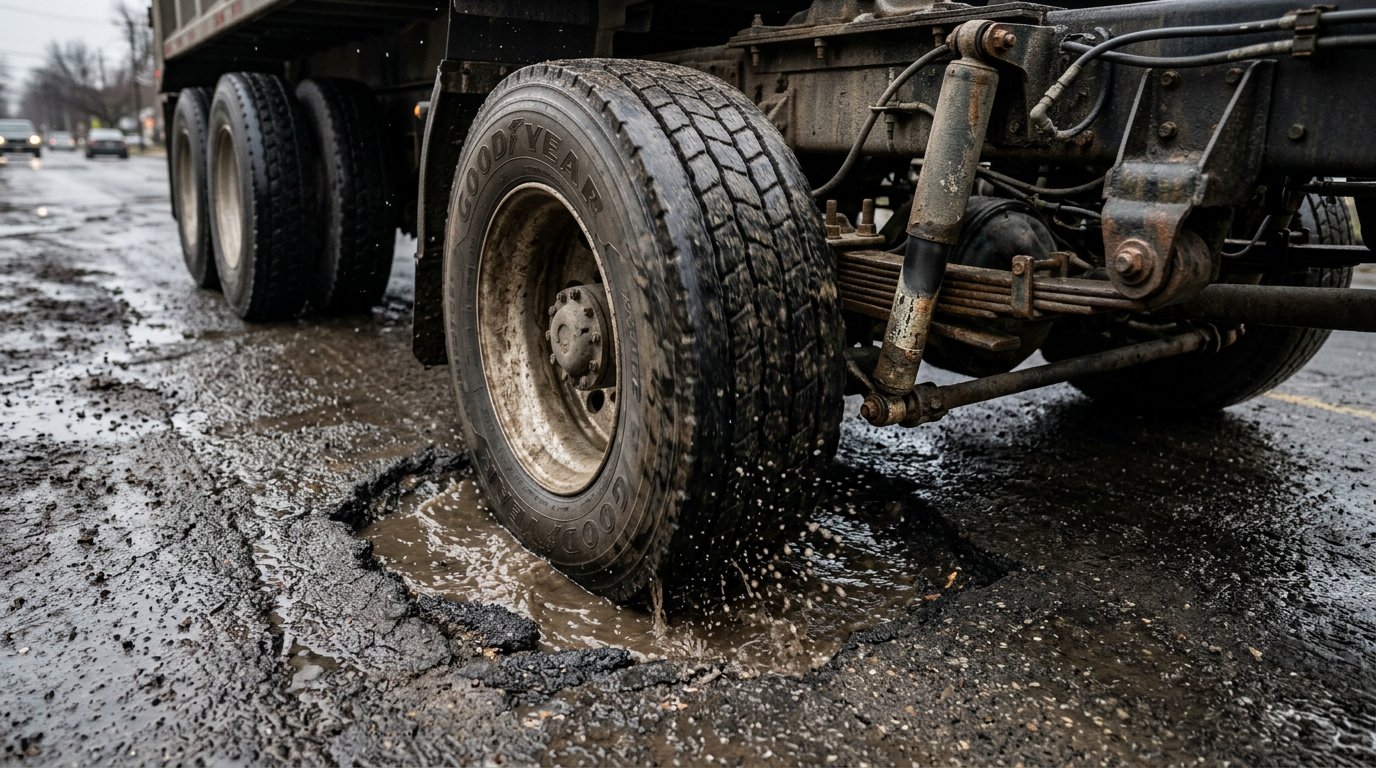
5) Uneven or damaged tires (roaring, thumping, and vibration)
Tires can create noises that get mistaken for suspension problems. Cupping, scalloping, separated belts, or uneven wear often produce a rhythmic thump or a growl that changes with speed. This sometimes happens after worn shocks, alignment issues, or running underinflated.
If you’re seeing uneven wear or feel vibration through the cab, checking tire services along with suspension and alignment is a practical way to stop the noise and protect your next set of tires.
Is It Safe To Drive With Truck Suspension Noise?
It depends on the cause, but it’s rarely something to ignore. A light squeak from a dry bushing may not be an immediate safety risk, while a clunk from a loose mount, shifting leaf spring, or worn steering joint can become dangerous quickly—especially at highway speed or under load.
Stop driving and get it checked if you notice:
- A loud clunk that’s getting worse
- Steering pull, drift, or a sudden change in handling
- Vibration that starts suddenly
- Visible sagging on one side or uneven ride height
Why Does My Truck Make A Clunking Noise Over Bumps?
A clunk over bumps is usually caused by a part moving more than it should—often a worn bushing, loose shock mount, shifting leaf spring hardware, or worn steering linkage. Because multiple components can create the same sound, the best next step is a hands-on inspection that checks mounting torque, play in joints, and signs of metal-to-metal contact.
For heavy-duty trucks and work vehicles, this kind of noise can also show up sooner when you’re frequently hauling, towing, or driving uneven job sites. That’s where experienced suspension diagnostics and repair can help pinpoint the problem before it turns into tire damage or steering wear.
How Can You Prevent Suspension Noises From Coming Back?
Some wear is normal, but repeat noises often come from missed root causes or not addressing related issues. A few practical prevention steps include:
- Re-torque and re-check hardware after suspension work (especially on leaf spring setups)
- Address alignment promptly after steering or suspension repairs to reduce stress on components
- Keep up with tire inspections and rotation schedules to catch wear patterns early
- Use quality parts designed for heavy-duty applications and real-world loads
If you’re considering upgrades (like improving ride quality on a work truck or RV), options like Liquid Spring suspension may be worth discussing depending on your vehicle and usage.
When It’s Time To Schedule Truck Repair In Wall, NJ For Suspension Noise
If your truck suspension noise is new, worsening, or paired with steering issues, uneven tire wear, or a change in ride height, it’s time to have it inspected. Noises rarely fix themselves, and early diagnosis is often the difference between a straightforward repair and a cascade of worn parts.
To learn more about the shop and what we focus on, you can visit our story or browse updates and tips on our blogs.
Common Questions About Diagnosing And Fixing Truck Suspension Noise
What does a squeaking sound in the truck suspension usually mean?
Squeaking is commonly caused by dry or worn bushings, sway bar components, or mounts that have lost their cushioning. It often shows up at low speed over bumps or during slow turns. A suspension inspection can confirm whether lubrication, bushing replacement, or related steering and suspension repair is needed.
Why does my suspension clunk when I brake or accelerate?
Clunks during braking or acceleration often point to movement under load transfer—such as worn leaf spring hardware, loose U-bolts, worn control arm bushings, or play in steering components. Because these issues can affect control, it’s best to have the front end and suspension mounting points checked by a heavy-duty truck repair shop.
Can bad alignment cause suspension noise?
Alignment itself doesn’t usually create noise, but the underlying causes of misalignment can. Worn steering parts, sagging springs, or damaged suspension components can change alignment angles and also create clunks or rattles. After repairs, an alignment service helps prevent uneven tire wear and reduces stress on new parts.
Do uneven tires sound like suspension problems?
Yes. Cupped or scalloped tires can create a rhythmic thump or a roaring sound that increases with speed, and it can be mistaken for suspension noise. Uneven wear is often linked to worn shocks or alignment issues. Checking tire condition and the suspension together is usually the fastest way to solve the problem.
When should I stop driving and call a truck mechanic?
Stop driving if the noise is loud and sudden, if steering feels loose, if the truck pulls, or if you feel strong vibration. Those signs can indicate a component that’s close to failure. Scheduling an inspection quickly can reduce downtime and help avoid damage to tires, steering parts, and suspension hardware.
If you’re hearing truck suspension noise and want a clear answer fast, contact R&H Spring and Truck Repair in Wall, NJ. Call 732-681-9000 or reach out through our contact page to schedule a suspension and steering inspection and get your truck back to smooth, dependable operation.