Steering problems on a commercial vehicle rarely stay small for long, and they can quickly turn into uneven tire wear, poor handling, and costly downtime. In this guide, we’ll cover the most common warning signs that steering components are wearing out, what’s safe to drive on, and when it’s time to schedule a steering inspection.
If you manage a work truck, RV, or fleet route in Central Jersey, catching steering issues early can also help you avoid bigger suspension and alignment repairs later.
What Does Steering Repair Mean on a Commercial Truck?
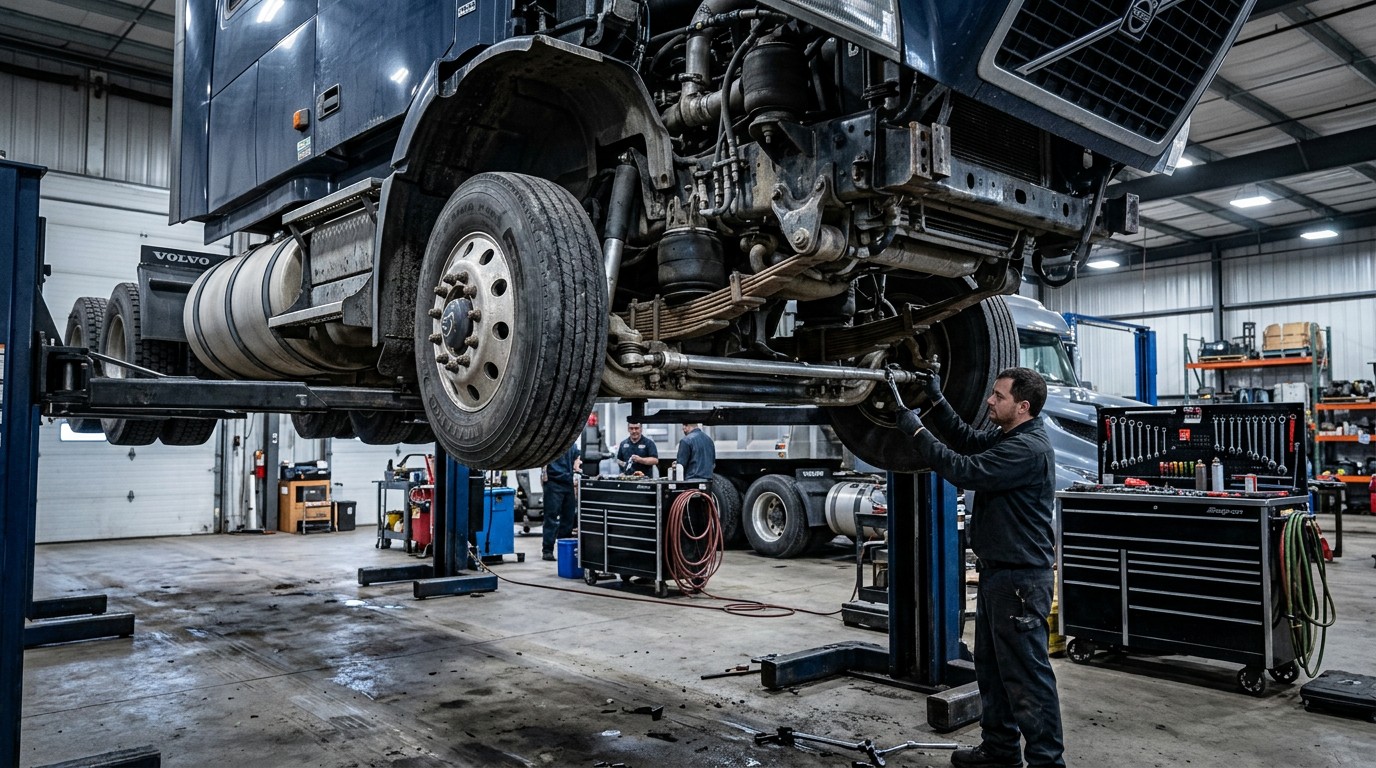
Steering repair on a commercial truck is the process of diagnosing and fixing worn or damaged parts that control direction and stability, such as linkages, steering gear components, and related suspension parts. Because steering and suspension work together, a proper repair often includes checking for play, wear, and alignment-related issues that can affect safe handling.
If you’re already noticing handling changes, it’s smart to start with a full inspection through a specialized shop offering steering and suspension repair for heavy-duty vehicles.
How Do You Know If You Need Steering Repair on a Work Truck?
Common signs you need steering repair truck service include wandering on straight roads, excessive steering wheel play, pulling to one side, new vibrations, or clunking noises when turning. If your truck is harder to keep in its lane or feels unstable under load, you should schedule an inspection before the problem accelerates.
These symptoms can come from worn steering parts, loose suspension components, or alignment problems. A thorough check may also involve commercial truck alignment services if tire wear or tracking issues are part of the complaint.
12 Signs Your Commercial Truck Needs Steering Repair
Some warning signs are obvious, while others show up gradually over weeks of driving. Here are the most common red flags we see with commercial truck repair and fleet truck repair issues tied to steering performance.
1) Your truck wanders or “drifts” at highway speeds
If you’re constantly correcting the wheel to stay straight, that’s often a sign of looseness in steering components or related suspension wear. It’s also common when alignment angles shift over time, especially on trucks that see rough roads or heavy loads.
2) Excessive steering wheel play
If the steering wheel moves more than it used to before the truck responds, something may be worn or loose. That delay in response can make lane changes and turns feel unpredictable, particularly with a loaded trailer.
3) Pulling to one side
Pulling can be caused by alignment, tire issues, or steering and suspension wear. If the pull is new and consistent, it’s worth checking alignment and front-end components together, especially if you rely on truck alignment in Monmouth County, NJ to keep tire costs under control.
4) Vibrations in the steering wheel
Vibration can point to tire balance issues, worn suspension parts, or components that have developed play. If it happens mainly at certain speeds, note the speed range and whether it changes under braking or turning—those details help narrow down the root cause.
5) Clunking, popping, or knocking when turning
Noises during turns are a major warning sign. They often indicate looseness, wear, or shifting movement where it shouldn’t be, and they can worsen quickly.
6) Steering feels “stiff” or harder than normal
Steering that suddenly feels heavy can indicate a mechanical issue that needs prompt diagnosis. Don’t assume it’s “just the road” if the change is noticeable and repeatable.
7) Poor return-to-center after a turn
After you complete a turn, the wheel should naturally ease back toward center. If it doesn’t, or if it feels like it sticks, you could be dealing with a steering or suspension condition that impacts safe handling.
8) Uneven or rapid tire wear
Steering issues often show up in the tires first. If you’re seeing feathering, cupping, or wear on one edge, you may need both steering attention and alignment correction. This is a common trigger for scheduling tire services for commercial trucks along with a front-end inspection.
9) The truck feels unstable in crosswinds or when passed by other vehicles
All trucks get some wind influence, but if your vehicle feels unusually “loose” or requires constant correction, it’s time to look for steering play or worn suspension parts.
10) Handling changes when loaded versus unloaded
If the truck drives acceptably empty but becomes difficult to manage under load, you may be seeing wear that only shows up under stress. This is especially relevant for contractors, delivery vehicles, and fleet applications.
11) Your trailer feels like it’s “pushing” the truck in turns
Sometimes the complaint sounds like a trailer problem, but the root cause can be steering looseness, alignment issues, or worn suspension. If you suspect the trailer is contributing, it may be time to combine a steering inspection with steering and suspension repair and a full alignment check.
12) You’ve hit a curb, pothole, or jobsite obstacle recently
Impact events can shift alignment and accelerate wear. Even if the truck “seems fine,” keep an eye out for new pulling, vibration, or tire wear in the days after the hit.
Is It Safe to Drive With Steering Problems?
It depends on the symptom, but it’s usually not worth the risk. If you have noticeable pulling, heavy steering, clunking noises, or excessive play, driving can be unsafe and may cause additional damage to tires and suspension parts. For commercial truck repair needs, addressing it early typically reduces downtime and prevents a small issue from turning into a larger repair.
If you’re unsure, getting a quick inspection is often faster and cheaper than waiting for a roadside failure—especially for fleet truck repair situations where a single breakdown affects schedules and customers.
Why Steering Issues Often Show Up With Alignment and Suspension Problems
Steering, suspension, and alignment are closely linked. When components wear, alignment angles can change; when alignment is off, steering can feel unstable and tires wear faster. That’s why many steering complaints end up needing a combined approach, such as checking ride height, steering play, and alignment readings.
For drivers searching for truck repair in Wall, NJ, it helps to choose a shop equipped to evaluate both steering feel and tire wear patterns using alignment services for trucks and commercial vehicles.
What Should Fleet Managers Track to Catch Steering Problems Earlier?
Fleet truck repair gets easier when you standardize what drivers report and what you inspect at service intervals. A few simple tracking habits can help you spot patterns before they turn into downtime.
- Driver notes on pull, wander, steering play, and new noises
- Tire tread depth readings across inner/center/outer edges
- Dates and mileage for rotations, alignments, and front-end work
- Records of impacts (potholes, curbs, jobsite hits)
- Any repeat complaints tied to the same axle or vehicle
If your trucks are going through tires faster than expected, pairing commercial tire services with steering and alignment checks can help identify the underlying cause instead of just replacing rubber.
When Should You Schedule Steering Repair for a Commercial Truck?
If you notice sudden changes (pulling, heavy steering, loud clunks), schedule service as soon as possible. For gradual changes like minor drift or early tire feathering, book an inspection before the next long route or heavy-haul day, so you can fix the issue on your schedule instead of losing a day to a breakdown.
For local operators who depend on fast turnaround, working with a trusted commercial truck repair shop near the jobsite can help keep downtime low. If you want to learn more about the people behind the shop, you can read our story and see how the team supports working trucks and fleets across Central Jersey.
Next Steps for Steering Repair Truck Service in Wall, NJ
If you’re seeing any of the signs above, don’t wait for tire wear, handling problems, or downtime to get worse. R&H Spring and Truck Repair can inspect your steering and related suspension components and help you decide what needs attention now versus what can be planned for later.
Call 732-681-9000 to talk through what you’re experiencing, or schedule service through the contact us page. For a deeper look at related services often performed at the same time, explore steering and suspension repair and truck alignment services.
Common Questions About Steering Repair for Commercial Trucks in NJ
What are the most common causes of steering problems on commercial trucks?
The most common causes include normal wear over time, impacts from potholes or curbs, and stress from heavy loads. Steering issues also show up when suspension parts wear and create extra movement. A proper inspection typically checks steering and suspension together, plus alignment and tire wear patterns.
Can bad alignment feel like a steering problem?
Yes. Poor alignment can cause pulling, wandering, and uneven tire wear that drivers often describe as a steering issue. The only way to know for sure is to check alignment readings and inspect steering and suspension components for looseness or damage, especially on vehicles used for commercial truck repair needs.
How do I know if my fleet needs steering repair or just new tires?
If tires are wearing unevenly or the truck feels unstable, it may be more than tires alone. Replacing tires without fixing the underlying steering or alignment problem often leads to the same wear returning quickly. A combined tire and steering inspection helps identify whether the issue is rubber, alignment, or worn components.
What should I tell a shop when scheduling steering repair truck service?
Share the exact symptoms (pulling, vibration, clunks), when they happen (speed, braking, turning), and whether the truck was recently loaded, hit a pothole, or had tire work done. If you have tread wear photos or mileage records, that can also help speed up diagnosis for fleet truck repair planning.
Do steering repairs usually require an alignment afterward?
Often, yes. If steering or suspension parts are replaced or adjusted, alignment angles can change, and an alignment helps ensure the truck tracks properly and doesn’t chew through tires. For many commercial vehicles, pairing steering work with a truck alignment in Monmouth County, NJ is a practical way to protect tire life.