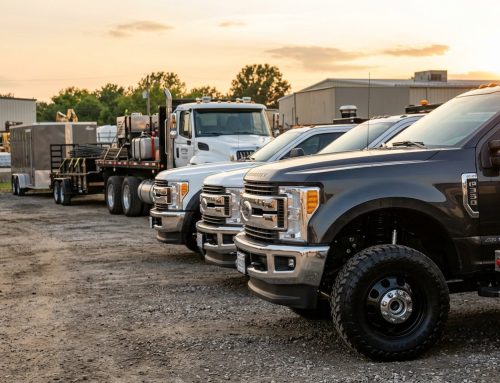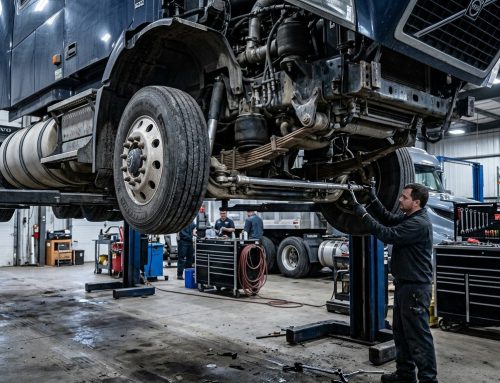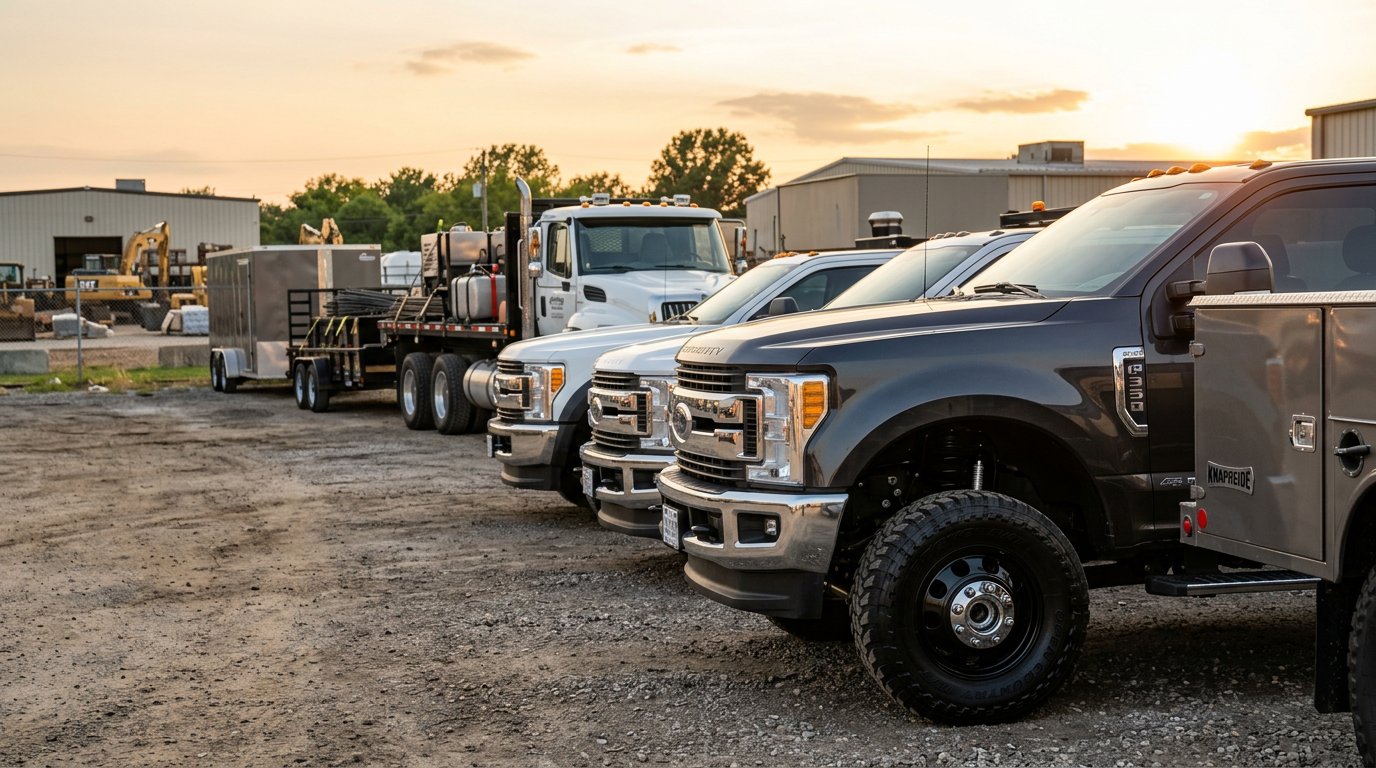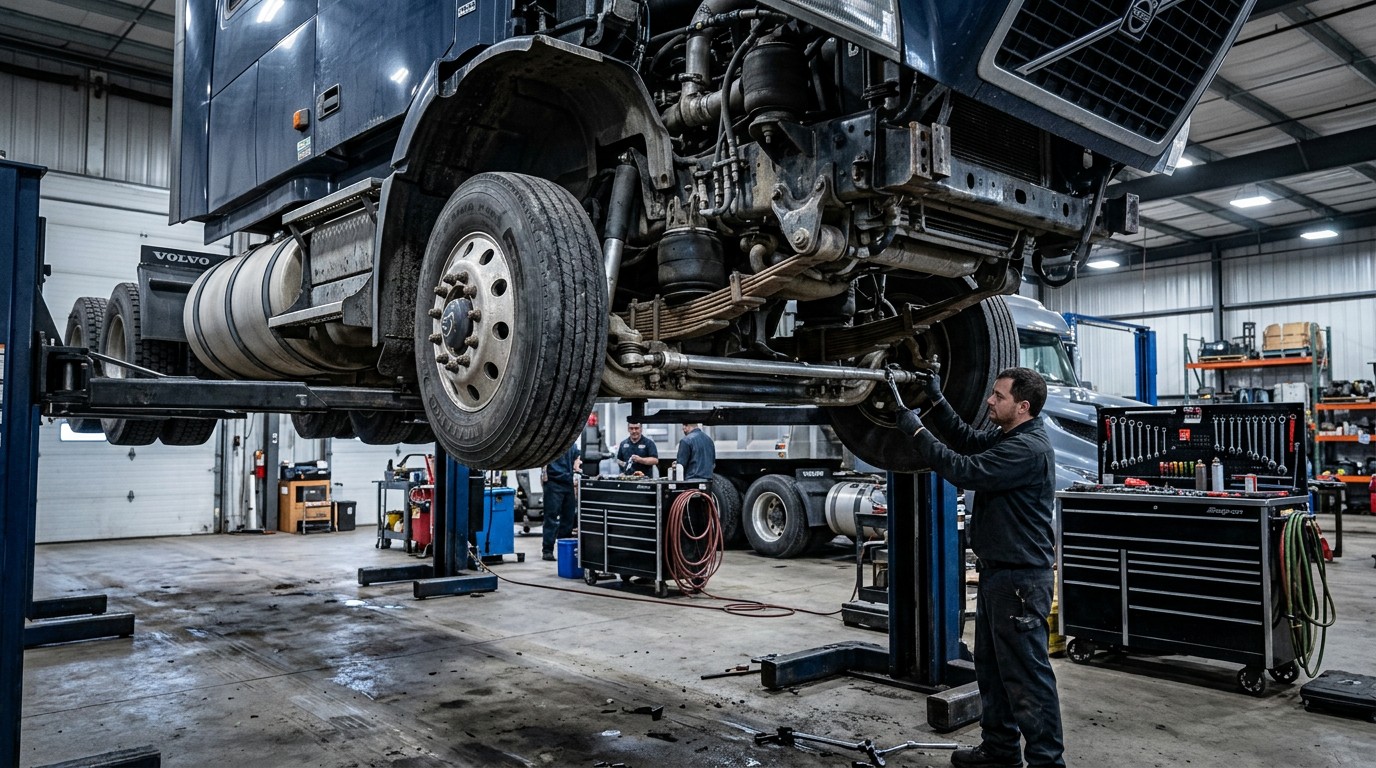
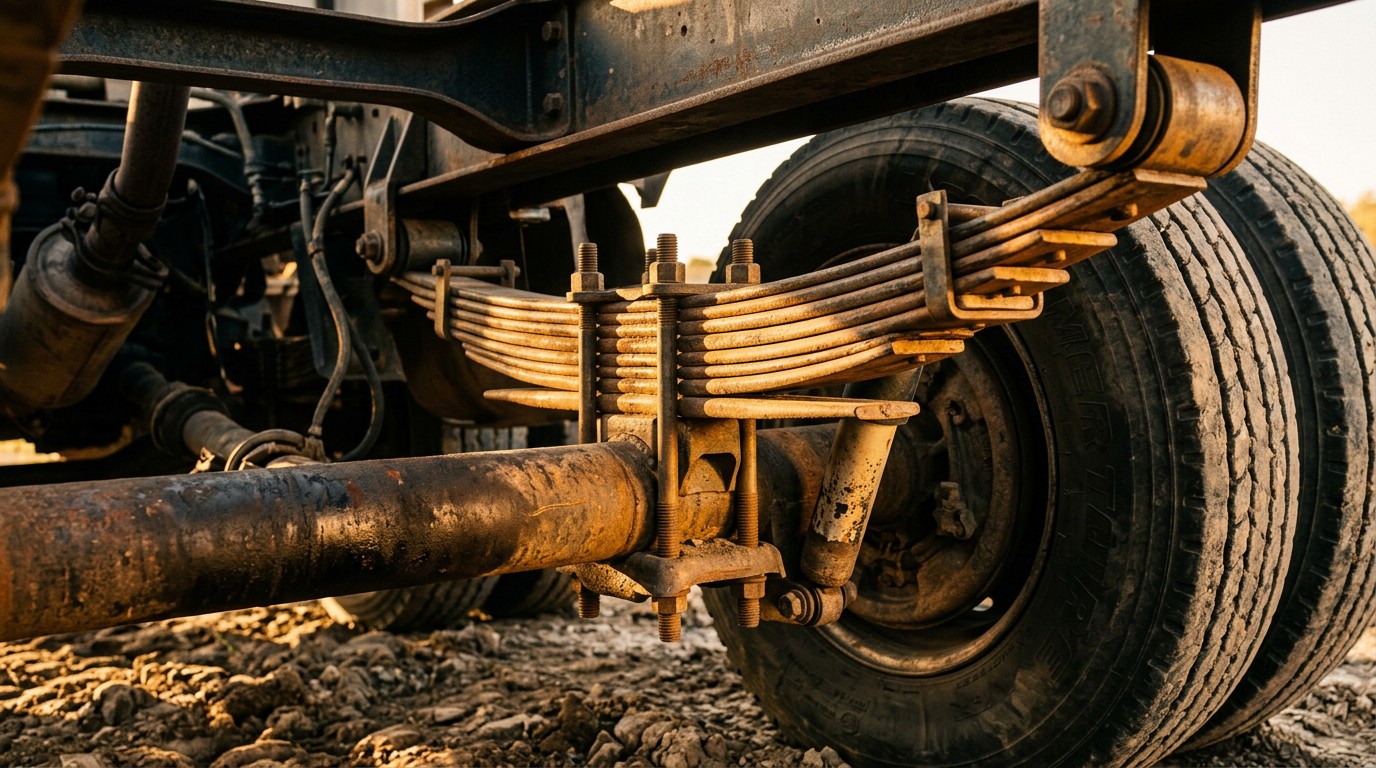
Leaf springs do a lot more than hold up the back of a truck or trailer. If they’re worn, cracked, or sagging, you can end up with poor handling, uneven tire wear, and extra stress on other suspension parts. In this guide, we’ll explain why leaf springs are so important, what failure looks like, and when it’s time to schedule leaf spring repair near Wall, NJ.
What Are Leaf Springs, And What Do They Do On Trucks And Trailers?
Leaf springs are stacked (or sometimes single) curved steel “leaves” that support vehicle weight, absorb road shock, and help keep the axle in the correct position. On many heavy-duty trucks and trailers, they’re a core part of the suspension system because they’re strong, simple, and built to handle constant loads.
When leaf springs are doing their job, the vehicle rides level, tracks straighter, and handles bumps without excessive bounce or sway. When they’re not, you’ll often feel it immediately—especially on loaded work trucks, equipment trailers, and RVs.
Why Are Leaf Springs So Important for Safe Handling and Load Control?
Leaf springs help keep your axle aligned under the frame while carrying and stabilizing the load. If the spring pack sags or a leaf breaks, the axle can shift slightly, which changes how the vehicle steers, brakes, and tracks down the road.
If you rely on a work truck or trailer in Central Jersey, leaf spring problems can quickly become a downtime issue. It’s also common for suspension issues to show up as alignment and tire wear problems, which is why we often recommend pairing suspension checks with truck alignment services near Wall, NJ when symptoms overlap.
How Do You Know If You Need Leaf Spring Repair Near Wall, NJ?
A good rule is this: if the truck or trailer doesn’t sit level anymore, or it feels less stable under load, the leaf springs should be inspected. A small problem (like a worn bushing) can turn into a bigger one (like broken leaves or damaged mounts) if it’s ignored.
- Rear end sits low, leans to one side, or looks “squatted” under normal load
- Clunking noises over bumps (often from worn bushings, loose U-bolts, or shifting spring packs)
- Harsh ride, excessive bounce, or increased sway
- Visible cracks, rust separation, or a broken leaf in the spring pack
- Uneven tire wear that keeps coming back
- Trailer looks nose-high or tail-low when loaded properly
For many owners, the fastest path to clarity is a full suspension inspection through our steering and suspension service, since steering, springs, shocks, and bushings all affect stability together.
What Causes Leaf Springs to Wear Out or Break on Heavy-Duty Vehicles?
Leaf springs are tough, but they’re still wear items—especially in real-world working conditions. Heavy loads, potholes, road salt, and repeated flexing all add up over time.
- Overloading or frequent max-capacity hauling
- Corrosion from road salt and moisture that weakens steel
- Worn spring eye bushings causing looseness and metal-on-metal stress
- Loose or stretched U-bolts allowing the axle to shift
- Impacts from curbs, potholes, jobsite terrain, or trailer jackknifing
If you’re running demanding routes or carrying equipment daily, proactive truck suspension repair serving Monmouth County, NJ can help catch early wear before it becomes a breakdown.
Can Bad Leaf Springs Cause Tire Wear and Alignment Problems?
Yes. A sagging spring pack, worn bushings, or a shifted axle can change ride height and axle position, which affects alignment angles and how tires meet the road. Even if you replace tires, the wear will return if the underlying suspension issue remains.
This is why suspension concerns and “pulling” complaints often get solved with a combined approach: repair the root suspension issue first, then verify alignment. If you suspect either problem, start with truck alignment near Wall, NJ and a suspension inspection so you’re not guessing.
What’s the Difference Between Truck Leaf Springs and Trailer Leaf Springs?
Truck leaf springs are designed around drivetrain torque, braking forces, and steering stability (even though they’re usually on the rear). Trailer leaf springs focus heavily on load support, ride control, and keeping the axle(s) tracking straight behind the tow vehicle.
Trailers also tend to sit for long periods, which can accelerate corrosion and bushing deterioration. If your equipment or utility trailer feels rough, bouncy, or starts “dog tracking,” it may be time for trailer suspension repair near Ocean County, NJ to prevent tire scrub and unsafe sway.
Should You Repair, Re-Arch, or Replace Leaf Springs?
Leaf spring repair options depend on what failed and how the spring pack measures under load. In some cases, replacing bushings, U-bolts, shackles, or a single damaged leaf can restore proper function. In other cases, full replacement is the safer, longer-lasting option—especially if there’s cracking, severe rust, or significant sag.
As a rule, we look at:
- Ride height and side-to-side lean
- Condition of each leaf, clamps, center bolt, and spring seats
- Bushing wear and spring eye condition
- Signs the axle has shifted (polished metal, uneven wear, alignment symptoms)
If you’re also planning ride height changes for clearance or payload needs, it’s worth coordinating suspension work with lift kit installation so the whole setup works together correctly.
Is It Safe to Drive With a Broken Leaf Spring?
It’s not safe to keep driving with a broken leaf spring. A broken leaf can shift, puncture a tire, damage brake lines, or let the axle move out of position—especially under load or during braking. If you suspect a break, reduce speed, avoid hauling, and get the vehicle inspected as soon as possible.
Even when the truck still “moves,” handling and braking stability can change quickly. For working vehicles and fleets, this can turn into a preventable roadside event and additional repair costs.
How Does Leaf Spring Condition Affect Heavy-Duty Truck Performance in Central Jersey?
In real service—stop-and-go routes, jobsite entrances, uneven pavement, and loaded runs—leaf springs play a huge role in keeping your truck predictable. Good springs help with:
- More stable braking under load
- Reduced sway in crosswinds and on ramps
- Less stress on shocks, hangers, U-joints, and steering components
- More consistent alignment and longer tire life
If your operation depends on uptime, pairing suspension checks with heavy duty truck repair serving Central Jersey is a practical way to catch issues early and avoid compounding damage.
When Should Fleets Schedule Preventive Leaf Spring Inspections?
For fleets, waiting for a spring to break usually costs more than inspecting on a schedule. Preventive checks make the most sense:
- Before busy seasons when downtime is hardest to absorb
- After repeated heavy-haul weeks or long-distance towing
- When new tire wear patterns show up
- Any time a driver reports new sway, bounce, or pulling
If you manage multiple units, combining regular suspension and alignment checks can reduce “mystery” tire costs and help standardize vehicle feel across the fleet.
Get Leaf Spring Repair Near Wall, NJ That Helps You Stay On the Road
If your truck, trailer, or RV is sagging, clunking, riding rough, or wearing tires unevenly, it’s worth getting the leaf springs and related suspension parts checked before the problem gets worse. We help owners and fleets across Monmouth County and Ocean County pinpoint the real cause and fix it the right way.
Call R&H Spring and Truck Repair at (732) 681-9000 or reach out through our contact us page to schedule an inspection and get clear next steps. If you’d like to learn more about who we are and how we work, you can also visit our story.
Common Questions About Leaf Springs, Truck Suspension, and Trailer Stability
How long do leaf springs last on a truck or trailer?
Leaf spring life depends on load, road conditions, corrosion, and how often the vehicle runs at or near capacity. Some last many years, while others wear faster under heavy hauling or rough jobsite use. If you notice sagging, lean, clunks, or recurring tire wear, it’s time for an inspection even if the springs aren’t visibly broken.
Do I need an alignment after leaf spring repair?
Often, yes. Leaf spring issues can let the axle shift or change ride height, which can contribute to pulling and uneven tire wear. After leaf spring repair, it’s smart to verify alignment and overall suspension condition so tires don’t continue wearing incorrectly. This is especially important for work trucks that see heavy loads and frequent stops.
What are the most common signs of a failing trailer suspension?
Common signs include bouncing that feels excessive, trailer sway, uneven tire wear (especially inside edges), and a trailer that doesn’t sit level when loaded properly. You may also hear metal-on-metal clunks from worn bushings or loose hardware. Catching these issues early can prevent tire scrub and reduce the risk of a roadside breakdown.
Can worn leaf spring bushings cause clunking or loose handling?
Yes. Bushings cushion the connection points where the spring mounts to the frame and shackles. When bushings wear out, the spring can shift slightly, leading to clunks over bumps and a “looser” feel in the rear. Replacing bushings in time can protect hangers, bolts, and spring eyes from more expensive damage.
Is leaf spring work considered heavy duty truck repair?
It can be, especially when it involves multi-leaf spring packs, U-bolts, shackles, hangers, and axle positioning on loaded work trucks and commercial vehicles. Because suspension affects handling and braking, leaf spring problems should be treated as a safety and uptime issue, not just a comfort concern.